

Hearing Assessment in Barnsley & Wetherby
Friendly, independent hearing assessments in Barnsley & Wetherby.
We offer more than just a hearing test; we want to support you on your journey to better hearing and ear health. Our aim is to give you tailored support for hearing loss.

Hearing Assessment
What Happens During Your Hearing Assessment?
Here at Echowell Audiology we want you to feel relaxed and welcome from the moment you arrive. This is where our clinic differs from high-street hearing providers. With a warm hello and plenty of time set aside for you, we’ll chat about your lifestyle, the challenges you are facing and the goals you have for your hearing. Together, we will explore what you want your hearing journey to look like and what matters most to you.
-
We begin by asking a few simple questions about your day-to-day life and where you feel your hearing could improve. We will also ask about your ears and any symptoms you may have noticed. This helps us understand your overall ear health before we begin the clinical checks.
-
Your assessment starts with a two-part examination of your ears:
Otoscopy: We use an otoscope to gently examine the health of your ear canal and eardrum.
Video Otoscopy: We then use a video otoscope so you can see exactly what we see. Many people find this really helpful and reassuring.
-
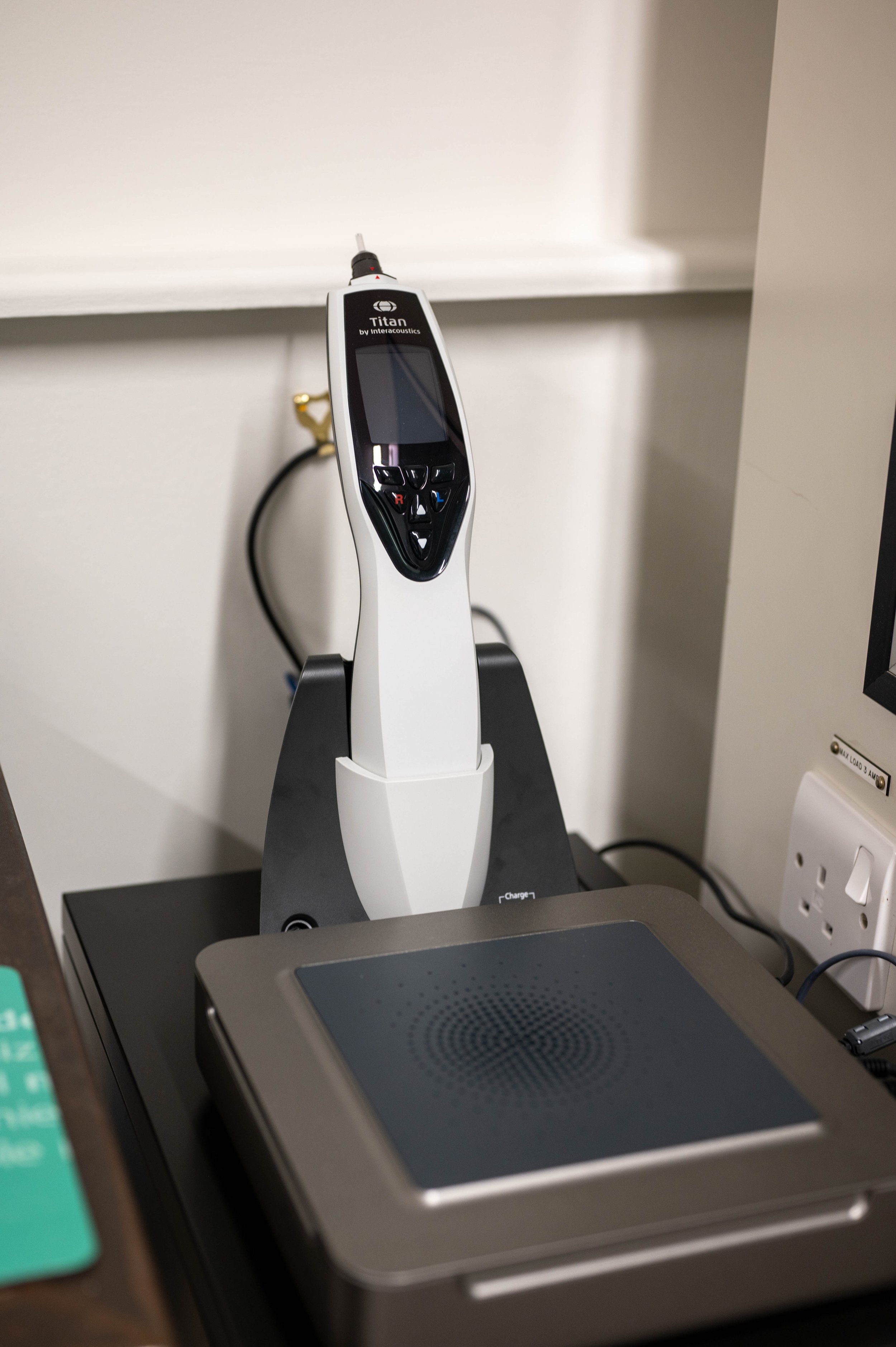
As an otoscope can only show us the outer ear, we also check how well your middle ear is working. We use a device called a tympanometer to assess the movement of the eardrum and the function of the Eustachian tube. You may feel a small pressure change similar to your ears popping on a plane.
-
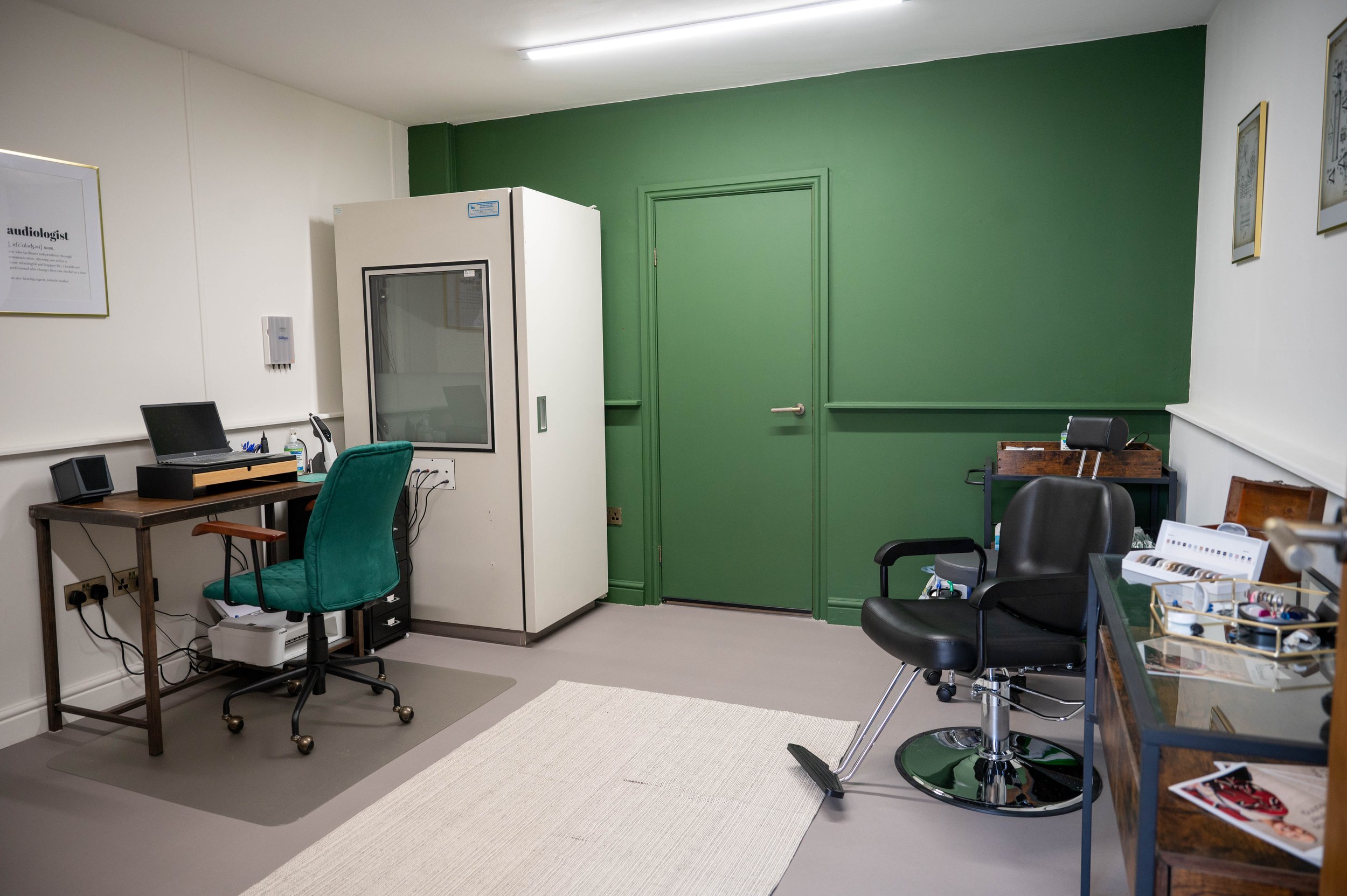
Once the ear health checks are complete, it is time to test your hearing. You will sit comfortably inside our specialist sound-treated booth, put on a pair of headphones and press a button whenever you hear any beep sounds. This allows us to understand the quietest sounds you can hear across different pitches.
-
After the test, we will sit down together and go through your results in a clear, simple and supportive way. If any hearing loss is present, we will talk through your options and create a treatment plan that is completely tailored to you, your needs and your lifestyle. You will have plenty of time to ask questions, and we will guide you through every step.



FAQs
-
As a rule of thumb, it is a good idea to get your hearing checked every two years, this will allow us to monitor and track any changes to your hearing.
-
Our hearing assessment appointments take 60 minutes to complete to ensure we cover everything in detail and allow you to ask any questions you may have. Don’t worry if you think of questions when you get home, you can always contact us to ask any questions you may have.
-
Common signs of hearing loss are:
turning the TV up louder than others want it.
finding it hard to follow conversation in pubs and restaurants.
struggling to hear on the phone.
often asking people to repeat what they say.
having your partner complain that you don’t listen to them.
feeling that other people mumble.
If you have sudden hearing loss in one ear, with ringing buzzing or whistling noses and dizzy spells. Call us urgently or visit A&E as soon as possible. The cause of your sudden hearing loss might not be serious, but in some cases can be a medical emergency. If this is the case, there is a very short window of time for treatment to successfully restore hearing.
-
Hearing loss happens when sound signals don’t reach the brain. This is caused by a problem in the hearing system.
There are two main types of hearing loss. It’s possible to have both types, and this is known as mixed hearing loss.
Sensorineural hearing loss - This is caused by damage to the hair cells inside the inner ear, or damage to the hearing nerve, or both. It makes it more difficult to hear quiet sounds and reduces the quality of sound that you can hear. Sensorineural hearing loss is permanent but can often be treated with hearing aids.
Conductive hearing loss - This happens when a problem with the ear, such as ear wax or an ear infection, stops sound from passing through to the cochlea (the hearing organ). Sounds will become quieter and may sound muffled. It can be temporary or permanent, depending on the cause. Conductive hearing loss is usually caused by ear problems.
-
Our hearing assessments cost £60.
-
Unfortunately, we are unable to any services on the NHS.